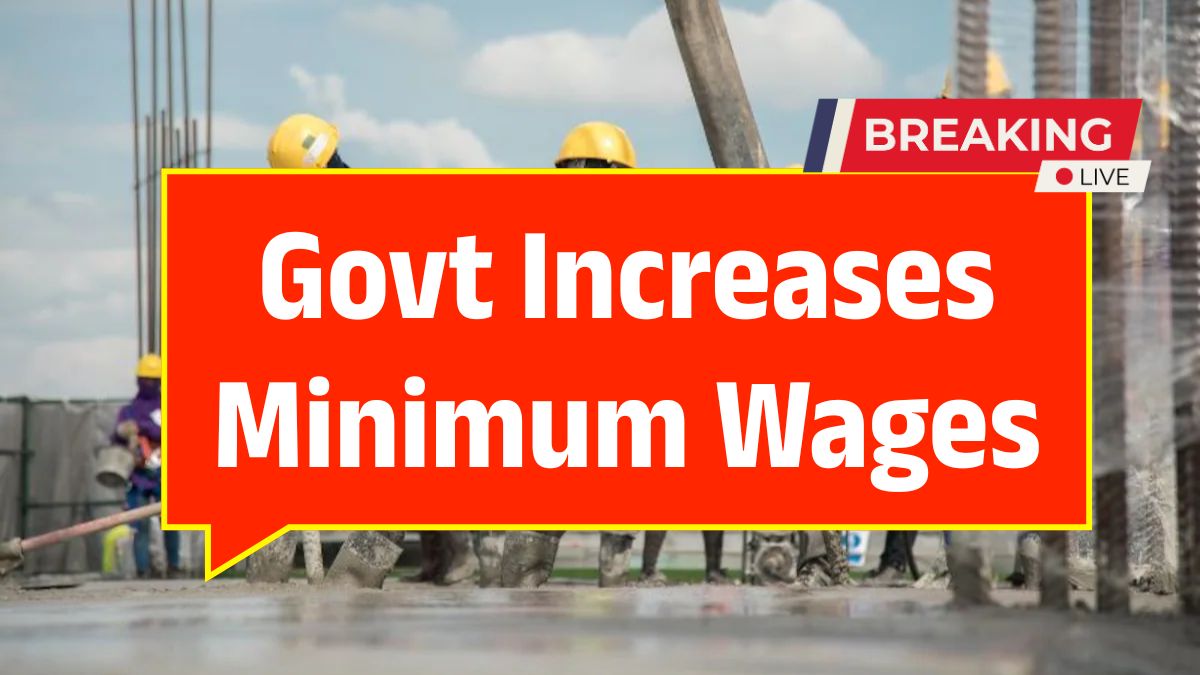
Labour Minimum Wages Hike : There is good news for millions of workers and laborers across the country. The government has recently announced an increase in minimum wages, keeping rising inflation and living costs in mind. This decision is expected to bring some financial relief to workers who depend on daily or monthly wages for their livelihood. With the implementation of the Labour Minimum Wages Hike, many workers may start receiving higher pay than before. Because of this, the update has become an important topic for laborers working in different sectors.
Labour Minimum Wages Hike: How Much Have Wages Increased
Under the new Labour Minimum Wages Hike update, the government has revised the wage structure for different categories of workers. Minimum wages are usually divided into three main groups: unskilled workers, semi-skilled workers, and skilled workers. Each category has its own wage rate depending on the type of work and required experience. With the latest revision, the daily wages for many of these categories have been increased. Even a small increase in daily wages can make a noticeable difference in a worker’s monthly income. For example, if a worker receives a higher daily wage, it directly increases the total amount earned in a month. The government has stated that the goal of this wage hike is to support workers and help them manage basic living expenses more comfortably.
Labour Minimum Wages Hike: Which Workers Will Benefit
The increase in minimum wages is expected to benefit a large number of workers across several industries. Workers involved in construction projects, factory jobs, agriculture, and small manufacturing units are likely to see the biggest impact. These sectors employ a large number of laborers who depend on daily wages. For many of them, the increase in minimum wages can help cover essential expenses such as food, housing, and transportation. The government has reportedly considered factors like inflation, cost of living, and economic conditions before deciding the new wage rates. As a result, the revised wages aim to provide a more realistic income level for workers. It is also possible that individual state governments may make additional changes based on their local economic conditions, which means the final wage levels may vary from one state to another.

Labour Minimum Wages Hike: What Workers Should Do
Workers should stay informed about the updated wage rules to ensure they receive the correct salary according to the law. If any worker feels that they are being paid less than the officially announced minimum wage, they have the right to raise the issue. In such cases, workers can approach their local labour department or labour office and file a complaint. Keeping records of employment, such as wage slips or payment details, can also help if there is a dispute. Awareness about labour rights is very important because it allows workers to protect themselves from unfair payment practices. The government’s intention behind the Labour Minimum Wages Hike is to make sure every worker receives fair compensation for their work.
Why Minimum Wage Revisions Are Important
Minimum wage revisions are usually carried out from time to time to keep up with economic changes. As the prices of essential goods and services increase, wages must also be adjusted so that workers can maintain a basic standard of living. Without regular wage updates, many laborers may struggle to manage daily expenses. By increasing minimum wages, the government aims to reduce financial pressure on workers and improve their overall quality of life. These changes also encourage employers to follow fair wage practices and maintain better working conditions.
Conclusion
Overall, the Labour Minimum Wages Hike is an important step toward improving the financial stability of workers. Higher wages can help workers support their families and manage everyday expenses more effectively. While the increase may vary depending on the type of work and the region, the decision reflects the government’s effort to address rising living costs. Workers and employers alike should stay updated about the new wage rules to ensure smooth implementation and fair payment practices across different industries.

Disclaimer
This article is provided for general informational purposes only. Minimum wage rules, salary structures, and labour regulations may vary depending on government notifications and state-specific policies. The information presented here is based on general updates and simplified explanations. Readers are advised to verify the latest wage rates through official government announcements or their respective state labour departments before making any financial or employment-related decisions.