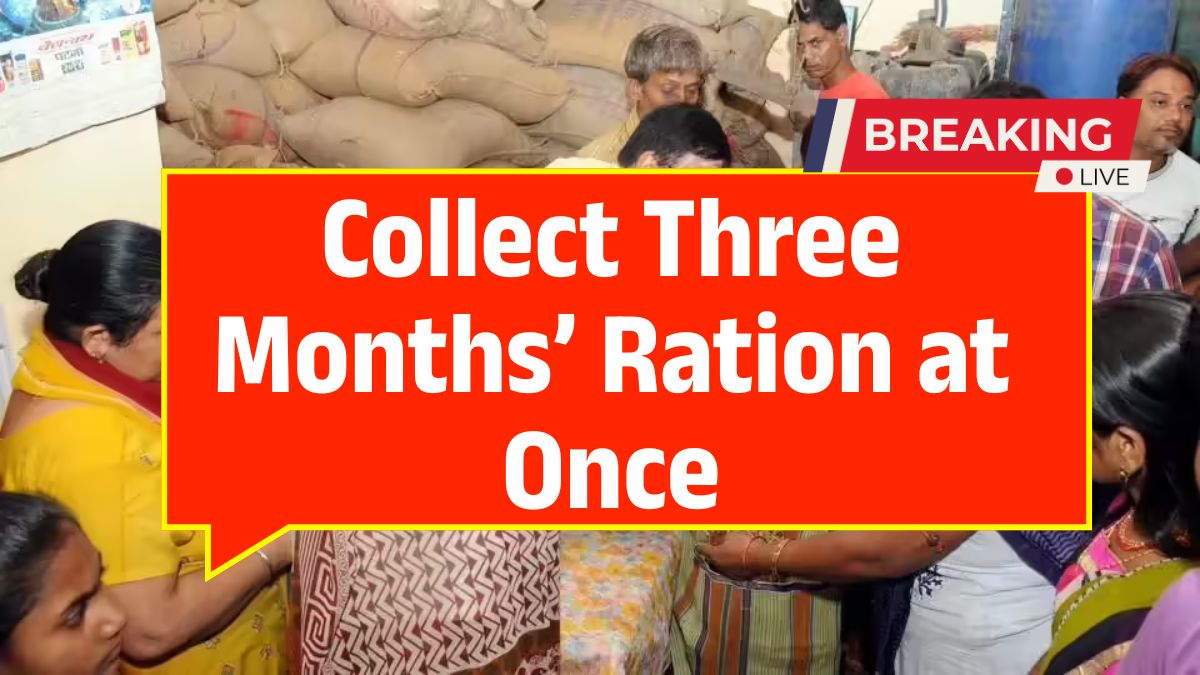
New Ration Card Rule : For millions of low-income and middle-class families in India, a ration card plays a very important role in everyday life. It helps households access subsidized food grains and other essential items through the Public Distribution System (PDS). Recently, a new update regarding ration distribution has attracted attention. According to the latest ration card rule, eligible beneficiaries may now receive up to three months’ ration in a single visit instead of collecting it every month. The idea behind this change is to make the distribution process easier, faster, and more convenient for families who depend on government support for their food needs. Many people often face long queues and repeated trips to ration shops every month. By allowing three months’ supply at once, the government hopes to reduce inconvenience and save valuable time for beneficiaries.
Three Months’ Supply in a Single Visit
Under the new arrangement, essential food items such as rice, wheat, sugar, and other approved commodities may be provided together for a three-month period. This means that instead of visiting the ration shop every month, beneficiaries may only need to visit about four times in a year. For daily wage workers and laborers, this change can be extremely helpful. Many of them lose working hours every month while waiting in long lines at ration shops. Missing work can mean losing income for the day, which directly affects household finances. With the option of collecting three months’ ration at once, people can avoid repeated trips and manage their work schedules better. It also reduces crowding at ration shops, making the entire process smoother and faster for everyone.
Relief for Rural and Remote Areas
The new ration rule could be particularly beneficial for families living in villages and remote regions. In many rural areas, ration shops are located far from residential settlements, and people sometimes need to travel several kilometers to reach them. Public transport may not always be easily available, so families often spend time and money on travel just to collect their monthly ration. In addition, heavy crowds and administrative delays can turn the process into a full-day activity. By allowing three months’ ration to be collected in one visit, the government hopes to reduce the burden on rural households. Fewer visits mean less travel, lower transportation expenses, and less physical effort, which can make a significant difference for families already facing financial challenges.

Special Benefit for Elderly and Vulnerable Groups
Another important advantage of this rule is that it can help elderly citizens and other vulnerable groups. For senior citizens, especially those above sixty years of age, visiting ration shops every month can be physically exhausting. Long queues, crowded spaces, and travel difficulties often make the process stressful. People with disabilities or health conditions may face similar challenges. Receiving three months’ ration in one visit can reduce the need for frequent trips and physical strain. It also decreases the dependence of elderly individuals on family members or neighbors for assistance. This change is seen as a step toward improving social welfare and ensuring that vulnerable individuals can access essential food supplies more easily.
Digital Monitoring for Transparency
To make sure that the system works efficiently and benefits reach the right people, authorities are increasingly relying on digital technology. Many ration shops already use biometric authentication and Aadhaar-based verification to confirm the identity of beneficiaries. Under the updated system, digital records will continue to play a key role in monitoring the distribution of food grains. Each transaction is recorded electronically, which helps reduce fraud, duplication, and misuse of the system. Digital tracking also allows government agencies to monitor supply levels and ensure that ration shops distribute the correct quantity to eligible families. Overall, the use of technology is expected to make the ration distribution process more transparent and accountable.
Disclaimer
The information provided in this article is intended for general awareness and informational purposes only. Ration card policies, distribution rules, and eligibility conditions may vary from one state to another and can change over time depending on government decisions. Readers are advised to check official announcements or contact their local Food and Civil Supplies Department for the most accurate and updated details. This article should not be considered an official government notification or policy document.