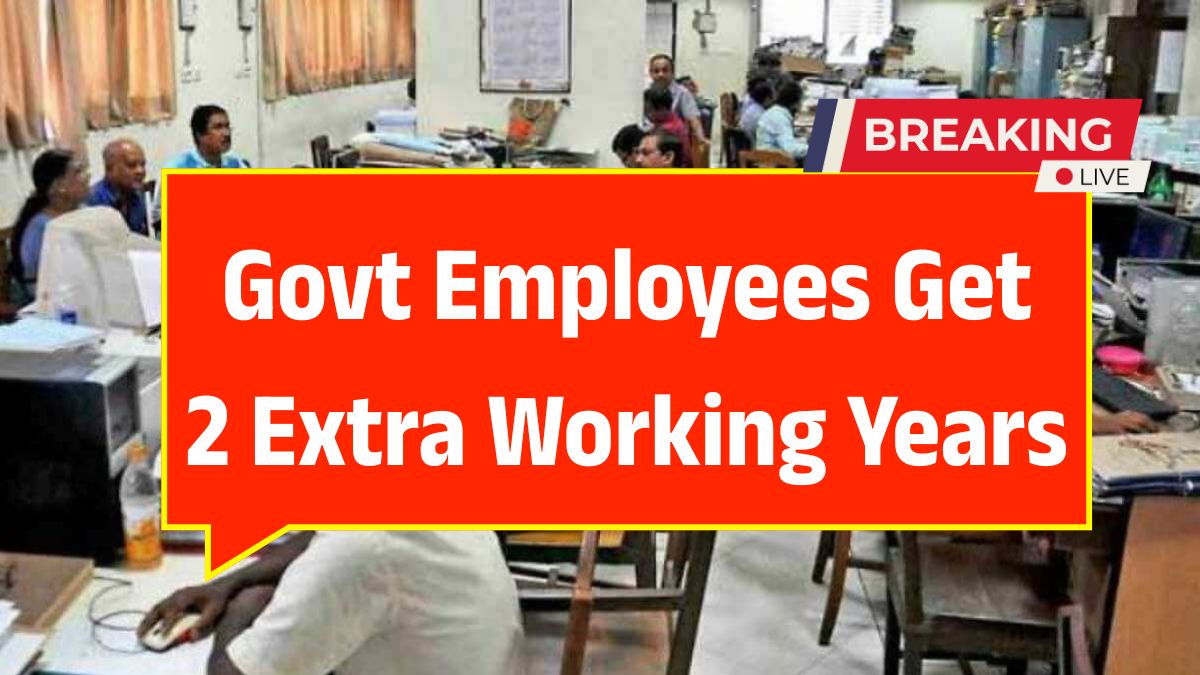
Retirement Age Hike Update : In recent days, a proposal related to government employees’ retirement age has attracted a lot of attention across the country. According to several reports and sources, the central government is considering a plan to increase the retirement age of central government employees from 60 years to 62 years. If this proposal is approved and implemented, it could affect millions of employees working in different government departments. For many workers, this change would mean two more years of job security, regular salary, and additional financial stability for their families. While the idea is still under discussion and not officially confirmed, it has already created excitement among many employees who see it as a positive step for their professional and financial future.
What Is the Proposal and Who Could Be Affected
At present, most central government employees retire at the age of 60. Once they reach this age, they are required to leave their service and begin receiving pension benefits according to the rules. The new proposal suggests increasing this limit by two years, which means employees could continue working until the age of 62. If implemented, this change would apply to employees working in central ministries, departments, and organizations that function under the central government. However, it is important to note that some government services already have a retirement age of 62, so the impact of this proposal may be limited in those sectors. Reports also suggest that the government may introduce this change gradually so that administrative work and department functioning are not disrupted during the transition period.
Why Is the Government Considering This Step
There are several reasons why the government is thinking about increasing the retirement age. One major factor is the improvement in healthcare and living standards in recent decades. Today, many professionals remain active, healthy, and capable of working efficiently even after the age of 60. Because of this, policymakers believe that experienced employees can continue contributing to the system for a longer time. Another important reason is the value of experience. Government officers often spend decades building expertise in administration, policy-making, and public service. Extending their service by two more years would allow the government to benefit from their knowledge and experience. This could also improve decision-making and overall administrative efficiency in many departments.

Financial Impact on Government Employees
If the retirement age is increased, it would bring significant financial benefits for employees. Working for two additional years means they would continue receiving their regular salary, dearness allowance, and other employment benefits during that period. This extra time in service would also increase their retirement savings because contributions to provident fund and pension schemes would continue for two more years. As a result, employees could receive a higher pension after retirement. For many workers who still have responsibilities such as children’s education, housing loans, or supporting elderly parents, two extra years of income could make a big difference. It would help them plan their finances better and reduce financial pressure in their later years.
Will It Affect Job Opportunities for Young People
One common concern raised by experts is whether increasing the retirement age could slow down new job recruitment for younger candidates. If existing employees remain in their positions for two additional years, some believe that fewer vacancies may open up in the short term. However, government officials have clarified that recruitment processes will continue as needed. According to them, the aim is to maintain a balance between experienced employees and young professionals entering the system. Experienced officers can guide and mentor younger employees, while new recruits bring fresh ideas and energy into the workforce. This balance could actually strengthen administrative functioning in the long run.
State Governments May Also Follow the Policy
If the central government decides to increase the retirement age, it is possible that several state governments may consider adopting a similar policy. In the past, many states have followed central government decisions regarding salary structures, allowances, and service rules. Some states have already shown interest in reviewing their retirement policies. If both central and state governments eventually adopt similar retirement ages, it could create uniformity across government services. This would make service conditions more consistent for employees working at different levels of government.

Disclaimer:
This article is intended for general informational purposes only and is based on publicly discussed proposals and media reports. The increase in retirement age from 60 to 62 years has not been officially confirmed by the government at the time of writing. Policies related to government service rules may change based on official decisions. Readers should always refer to government notifications, official websites, or authorized sources for accurate and updated information before relying on such updates.