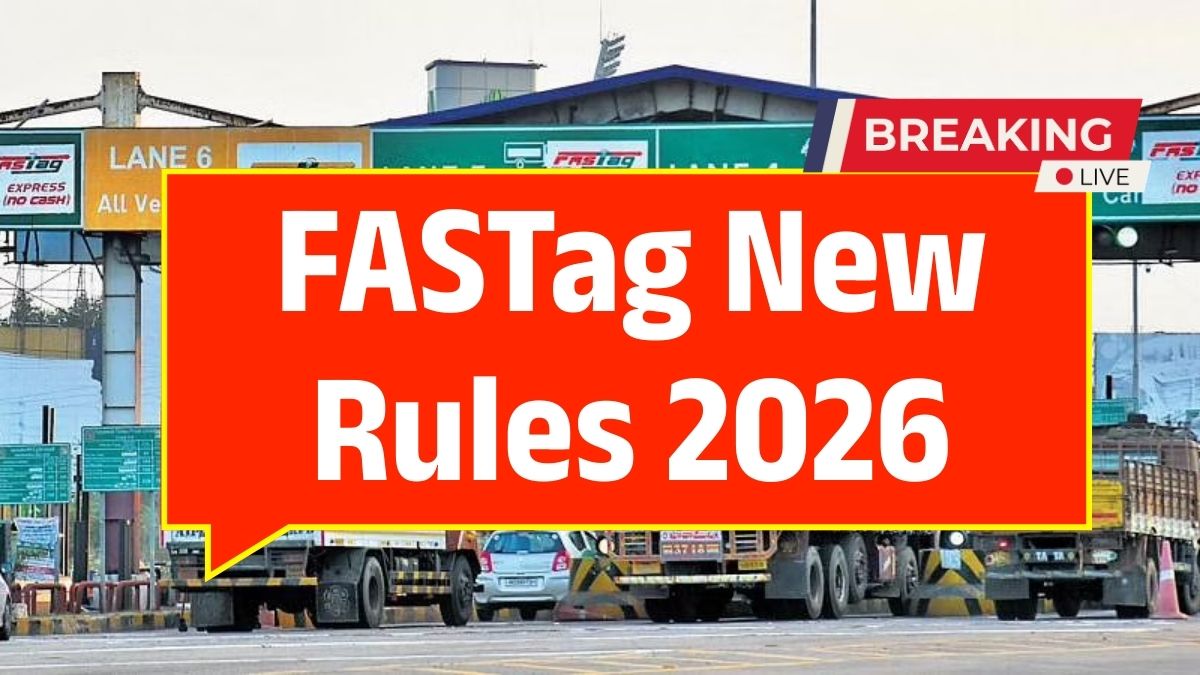
FASTag New Rules 2026 : The FASTag system has become a regular part of highway travel across India. If you drive on national highways, you have probably used FASTag many times while passing through toll plazas. It was introduced to reduce long queues, speed up toll payments, and make highway travel smoother. Instead of stopping to pay cash, the toll amount is automatically deducted from a prepaid wallet linked to a small sticker placed on the vehicle’s windshield.
Over the years, the use of FASTag has grown rapidly, and almost every vehicle traveling on national highways is required to use it. As more vehicles joined the system, authorities noticed certain issues like incorrect vehicle details, misuse of FASTags, and incomplete documentation. To address these problems and make toll collection more efficient, new FASTag rules were introduced in 2026.
These updated regulations mainly focus on proper account verification, accurate vehicle linking, and maintaining sufficient balance in FASTag wallets. If vehicle owners fail to follow these rules, their FASTag account could face penalties, suspension, or other restrictions. Because of this, it is important for every vehicle owner to understand the latest updates and ensure their FASTag account is compliant with the new guidelines.

Full KYC Is Now Mandatory
One of the most important changes introduced in 2026 is the strict requirement for complete Know Your Customer (KYC) verification. Earlier, some FASTag accounts were operating with partial or incomplete KYC details. Now, authorities have made it mandatory for all users to complete full KYC verification with their issuing bank or authorized FASTag service provider.
KYC verification usually requires submitting valid identity and address documents such as Aadhaar, PAN card, or other approved identification proofs. These documents help verify the identity of the FASTag user and ensure that each account is linked to a genuine vehicle owner.
If the KYC process is incomplete or if the submitted documents are outdated, the FASTag account may be temporarily suspended. In such cases, the tag might stop working at toll plazas until the verification process is completed. This can cause delays and inconvenience while traveling.

The main reason behind this rule is to improve transparency in the system and prevent fraudulent activities. In the past, some users created multiple FASTag accounts or used incorrect information, which created confusion in the toll payment system. By enforcing full KYC compliance, authorities aim to maintain a reliable and secure toll collection network.
Vehicle owners are advised to check their FASTag account details through their bank’s mobile app, website, or customer support service. Making sure that the name, address, identification proof, and vehicle registration details are correct will help avoid sudden interruptions during travel.
Correct Vehicle Linking Is Essential
Another important rule introduced in the 2026 update focuses on proper vehicle linking. Under the new guidelines, one FASTag must be linked to only one vehicle. This means that a single FASTag cannot be used for multiple vehicles under any circumstances.

In the past, some vehicle owners tried to use one FASTag sticker on different vehicles, which caused errors in toll collection systems. When the system detects that the FASTag is linked to a different vehicle registration number than the one passing through the toll plaza, it may flag the transaction as suspicious.
Because of this, authorities have strengthened monitoring systems to detect such mismatches quickly. If a mismatch is found between the FASTag account and the vehicle’s registration number, the tag may be blacklisted or suspended.
Vehicle owners should be especially careful when they sell their car, transfer ownership, or buy a new vehicle. In such situations, the FASTag details must be updated immediately with the issuing bank or service provider. If the FASTag is still linked to the previous vehicle owner or registration number, it can lead to transaction failures or penalties at toll plazas.

Ensuring that the correct vehicle registration number is linked to the FASTag will help maintain smooth toll payments and avoid unnecessary complications while traveling on highways.
Maintaining Sufficient Wallet Balance
Another important aspect highlighted in the new rules is maintaining enough balance in the FASTag wallet. Since the system automatically deducts toll charges from the linked prepaid account, having insufficient balance can cause problems during travel.
If a vehicle passes through a toll plaza and the FASTag wallet does not have enough funds, the system may charge double the toll amount as a penalty. This rule has been introduced to encourage users to maintain sufficient balance in their accounts and reduce payment failures.

Many travelers sometimes forget to recharge their FASTag wallet before starting a long journey. When they reach the toll plaza, the system detects the low balance and applies additional charges, which can lead to unexpected expenses.
To avoid such situations, most banks and FASTag providers offer convenient options for monitoring and recharging accounts. Users can check their wallet balance through mobile banking apps, FASTag portals, SMS alerts, or automatic recharge services.
Some service providers even allow users to enable auto-recharge features, where the wallet balance is automatically topped up once it falls below a certain limit. This ensures uninterrupted travel and prevents penalties due to insufficient funds.

Common Reasons for FASTag Suspension
Even though the FASTag system is designed to make travel easier, certain issues can lead to the suspension of a FASTag account. One of the most common reasons is incomplete or outdated KYC documentation. If the required verification documents are not submitted or updated, the issuing bank may temporarily block the FASTag.
Another reason for suspension can be incorrect vehicle registration details. If the FASTag is linked to the wrong vehicle number or if there is a mismatch between the tag and the vehicle using it, authorities may take action.
Repeated cases of insufficient wallet balance may also cause temporary blocking of the FASTag account. If toll transactions fail multiple times due to low balance, the system may restrict the account until the issue is resolved.

Physical damage to the FASTag sticker is another common problem. The tag must be properly placed on the windshield so that toll plaza scanners can read it correctly. If the sticker becomes damaged, scratched, or improperly positioned, the scanning system may fail to detect it.
When the scanner cannot read the tag, the driver may be required to pay the toll manually or may face additional charges. For this reason, vehicle owners should regularly check the condition and placement of their FASTag sticker.
Steps to Avoid Penalties and Travel Smoothly
To ensure smooth travel and avoid penalties, vehicle owners should follow a few simple steps. First, they should confirm that their FASTag account has completed full KYC verification with correct and updated documents.

Second, the FASTag must be linked to the correct vehicle registration number. If there is any change in vehicle ownership, registration number, or personal details, the account information should be updated immediately.
Third, maintaining sufficient wallet balance is extremely important. Before starting a highway journey, checking the FASTag balance and recharging if necessary can prevent unexpected penalties at toll plazas.
Vehicle owners should also ensure that the FASTag sticker is properly placed on the windshield and remains in good condition. If the tag becomes damaged or unreadable, it should be replaced as soon as possible through the issuing bank or authorized service provider.

Regularly monitoring FASTag transactions through official banking apps or FASTag portals can help users identify any issues early. By staying aware of account activity and following the updated rules, drivers can enjoy smooth and hassle-free travel on national highways.
Disclaimer
This article is intended for general informational purposes only and is based on publicly available information and commonly discussed updates related to FASTag policies in India. FASTag rules, penalties, operational guidelines, and enforcement practices may change over time based on official notifications issued by government authorities, banks, or authorized FASTag service providers. Vehicle owners are strongly advised to verify the latest updates through official FASTag issuer websites, bank portals, or government transport platforms before making decisions related to their FASTag account or highway travel.