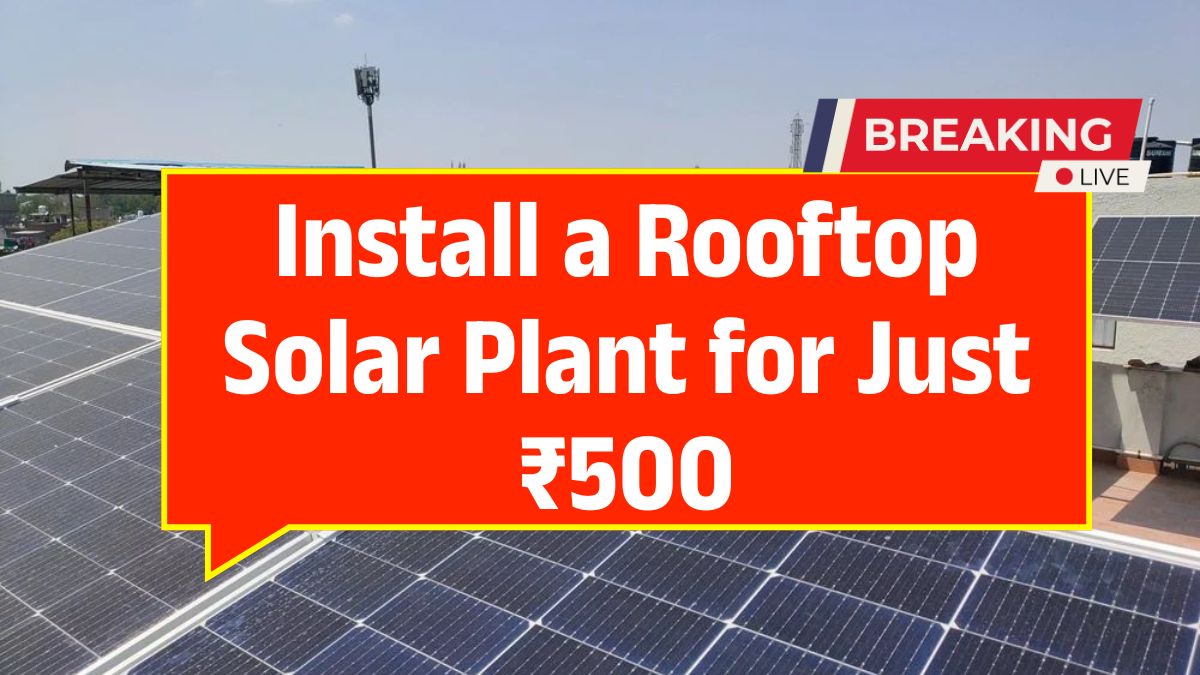
Government Rooftop Solar Scheme : These days, managing household expenses has become more challenging for many families. Prices of daily essentials such as food, education, healthcare, and transportation continue to rise. Along with these expenses, electricity bills have also become a significant part of the monthly budget. During summer months, the use of fans, coolers, and air conditioners increases electricity consumption even further. As a result, many households look for ways to reduce their power bills without compromising comfort.
Government Push for Rooftop Solar Energy
To help people reduce electricity expenses and promote clean energy, the government has been encouraging citizens to adopt rooftop solar systems. Under the Rooftop Solar Yojana, homeowners can install solar panels on their rooftops and generate electricity directly from sunlight. This allows families to produce their own power instead of depending completely on the grid. Over time, this can significantly reduce electricity bills while also supporting the shift toward renewable energy.
Why Solar Energy Is Becoming Popular
India’s energy demand has been growing rapidly due to population growth and industrial development. Traditional electricity production still relies heavily on coal and other fossil fuels, which can harm the environment. Solar energy offers a cleaner and sustainable alternative. It uses sunlight, a natural resource that is freely available and renewable. Solar panels convert sunlight into electricity without producing pollution, making them an environmentally friendly option for households and communities.

Subsidy Makes Solar Installation More Affordable
One of the biggest attractions of the rooftop solar scheme is the government subsidy provided to homeowners. In many cases, the government offers financial support of up to 40 percent of the total system cost. This subsidy is usually transferred directly to the beneficiary’s bank account, making the process transparent and convenient. Because of this support, installing solar panels is no longer limited to wealthy households. Middle-income families can now also consider switching to solar power.
Long-Term Savings from Solar Systems
A major advantage of installing a rooftop solar system is the long-term savings it offers. Solar panels generate electricity using sunlight and do not require fuel, which means the cost of producing electricity becomes very low after installation. Most solar panels have an average lifespan of about 25 years. Once the initial investment is recovered, families can enjoy nearly free electricity for many years. This makes solar systems a practical financial decision in the long run.
Net Metering Can Even Generate Extra Income
Another interesting feature of rooftop solar systems is net metering. If a household produces more electricity than it consumes, the extra power can be sent back to the electricity grid. In return, the electricity company credits the consumer’s account. In some cases, this surplus power can help reduce future bills or even generate a small additional income. This makes rooftop solar not only a cost-saving solution but also a potential source of financial benefit.

Cost and Capacity of a Typical Solar System
For an average household, a 2-kilowatt solar system is usually enough to meet basic electricity needs such as lighting, fans, television, and small appliances. The cost of installing such a system can range between ₹1 lakh and ₹1.2 lakh depending on the brand, equipment quality, and installation charges. After applying the government subsidy, the effective cost for the homeowner may drop to around ₹60,000 to ₹70,000. With monthly savings on electricity bills, the system cost can often be recovered within five to six years.
Basic Eligibility and Requirements
To apply for the Rooftop Solar Yojana, certain conditions must be met. The applicant should own a house with a suitable rooftop where solar panels can be installed. The roof should be strong, open, and receive sufficient sunlight during the day. Both urban and rural households can apply for the scheme. However, it is necessary to have a valid electricity connection in the applicant’s name to ensure proper integration with the power grid.
Simple Application and Installation Process
The government has made the application process relatively simple so that more people can participate in the scheme. Interested homeowners can apply through the official portal by submitting basic details and required documents such as identity proof, electricity bill, and bank account information. After the application is reviewed, a technical team may visit the property to inspect the rooftop and confirm that it is suitable for solar installation. Once approved, an authorized vendor installs the solar panels and connects the system to the home’s electricity setup.

Disclaimer
This article is intended for general informational purposes only. Details related to the Rooftop Solar Yojana, including subsidy amounts, eligibility criteria, costs, and application procedures, may change depending on government policies and regional regulations. Readers are advised to verify the latest information through official government portals or authorized agencies before making any financial or installation decisions related to solar systems.